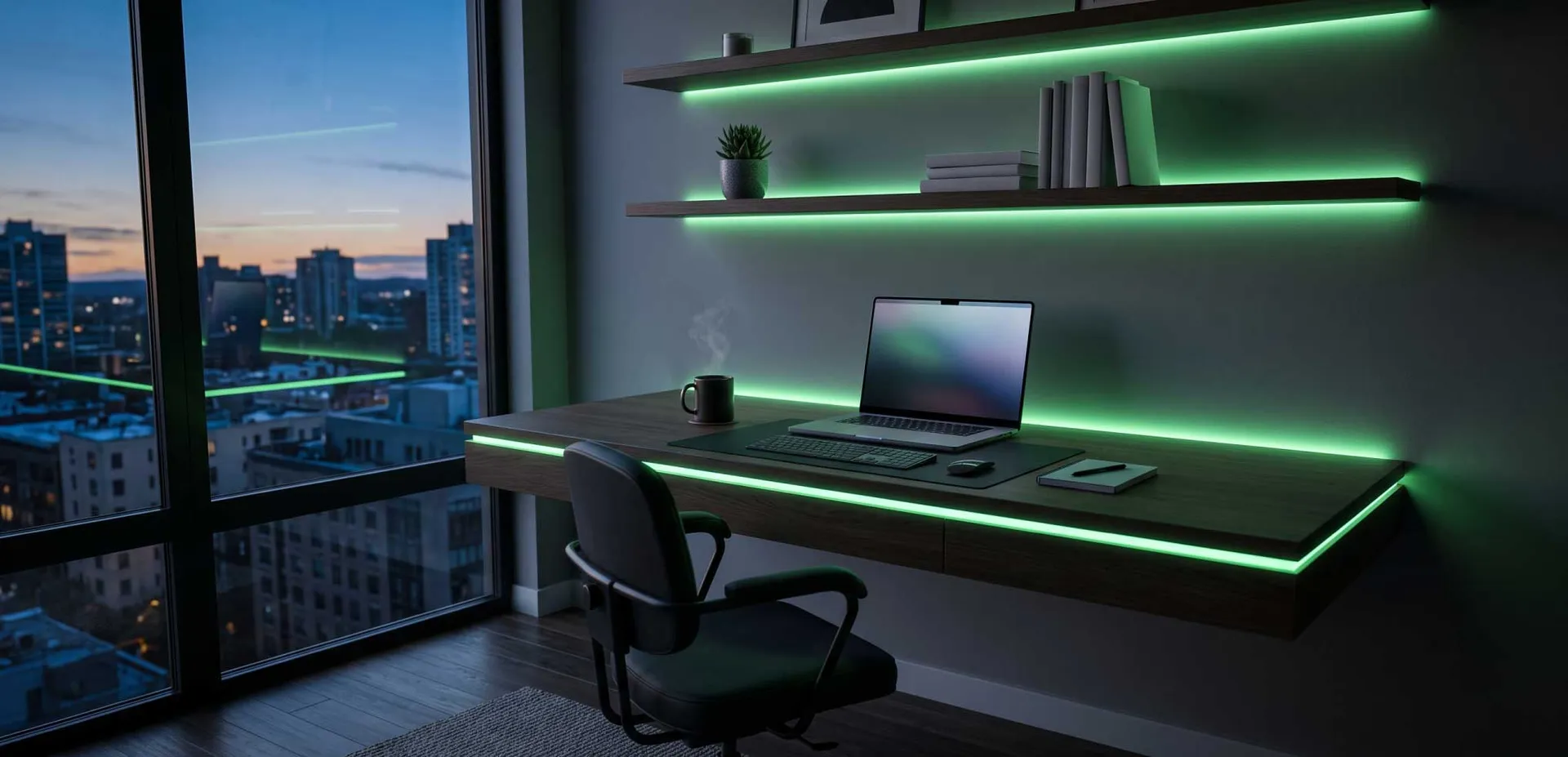
If you are currently struggling to survive in the remote freelance market, you must confront a harsh reality. The primary reason freelancers fail is rarely a lack of technical skill, a poor portfolio, or an oversaturated market. The quiet, invisible killer of the independent professional is the total collapse of personal structure.
When you transition from a traditional corporate environment to a home-based freelance business, you lose the external scaffolding that previously forced you to be productive. There is no manager monitoring your screen, no mandatory morning stand-up meeting, and no peer pressure from colleagues working nearby.
As your instructor, I am going to explain the precise psychological and neurological reasons why self discipline is everything in freelance work from home. Furthermore, I will provide you with a step by step architectural framework to rebuild your executive function, overcome chronic procrastination, and scale your remote business into a highly profitable enterprise.
The Psychological Shift From Employee To Independent Freelancer
To understand the mechanics of self discipline, we must first examine the psychology of traditional employment. In organizational psychology, corporate environments are designed to provide extrinsic motivation. Your behavior is regulated by external forces such as deadlines dictated by superiors, the physical boundary of an office, and the immediate threat of termination if you do not comply.
When you become a freelancer, all extrinsic motivation vanishes. You are now entirely reliant on intrinsic motivation and executive function. Executive function is the cognitive control system that manages working memory, flexible thinking, and self regulation.
In a traditional job, your executive function is subsidized by the company. In a freelance work from home environment, your executive function bears the entire load. You are simultaneously the Chief Executive Officer setting the vision, the Project Manager enforcing the deadlines, and the Employee executing the labor. Without a rigid system of self discipline, this cognitive load causes rapid decision fatigue, leading directly to procrastination and burnout.
Understanding The Freedom Trap In Remote Work
The most heavily marketed benefit of freelancing is freedom. You are promised the freedom to set your own hours, choose your own clients, and work from your living room. However, without extreme self discipline, this freedom quickly devolves into chaos. This phenomenon is known as the Freedom Trap.
When you have absolute freedom, every single action requires a conscious choice. Should you start working at eight in the morning or ten? Should you check your email first or write code? Should you take a lunch break now or later?
The human brain consumes an immense amount of metabolic energy making choices. If you start your day without a disciplined, pre-determined structure, you will exhaust your cognitive battery simply deciding what to do. By the time you actually sit down to execute billable client work, your brain seeks the path of least resistance, which usually involves scrolling through social media or doing low value administrative tasks.
To survive as a freelancer, you must paradoxically restrict your freedom. You must build artificial constraints.
Step One Designing A Strict Environmental Architecture
The foundation of freelance self discipline begins with your physical environment. Human behavior is highly context dependent. Your brain associates specific physical locations with specific neurological states. If you attempt to work from your bed or your living room couch, your brain experiences cognitive dissonance because it associates those locations with rest and entertainment.
You must architect a dedicated workspace that triggers a state of deep focus.
- Isolate The Workspace Choose a specific room or a distinct corner of a room that is used exclusively for client work. Do not pay bills, watch videos, or eat meals in this space.
- Remove Friction Ensure all necessary tools, software, and hardware are optimized and ready before your work session begins. A slow computer or a messy desk creates task initiation friction, which is the primary trigger for procrastination.
- Optimize Ergonomics Invest in a professional chair, proper lighting, and an external monitor. Physical discomfort drains your willpower reserves faster than complex mental tasks.
By standardizing your physical environment, you train your brain to automatically shift into an execution mindset the moment you sit in your chair.
Step Two Implementing Temporal Boundaries For Remote Work
Without the artificial boundaries of a nine to five schedule, freelance work easily bleeds into your personal life. This leads to the "always on" mentality, where you are never truly working but never truly resting. You must implement strict temporal boundaries.
- Define Your Operating Hours Analyze your biological rhythms and determine when your cognitive output is highest. If you are a morning person, establish your operating hours from seven in the morning until three in the afternoon.
- The Implementation Intention Protocol Do not rely on willpower to start working. Use implementation intentions, which are pre-determined rules for behavior. Write down a daily statement such as When it is eight in the morning, I will sit at my desk and open my current client project.
- Parkinsons Law Integration Parkinsons Law states that work expands to fill the time allotted for its completion. If you give yourself the entire week to design a logo, it will take the entire week. Impose artificial, highly aggressive deadlines on yourself to manufacture a sense of urgency.
Step Three Overcoming Freelance Procrastination Through Dopamine Regulation
In the 2026 digital economy, your attention is the most valuable commodity on the planet. Algorithms are engineered by thousands of data scientists to hijack your dopamine system. If you try to combat these algorithms using sheer willpower, you will lose.
Overcoming freelance procrastination requires systemic dopamine regulation.
- The Digital Fast Before Deep Work Your first two hours of the workday must be entirely devoid of high dopamine inputs. Do not check social media, do not read the news, and do not look at your email. If you flood your brain with cheap dopamine first thing in the morning, executing challenging client work will feel agonizingly difficult.
- Device Separation During your designated deep work blocks, physically remove your smartphone from your office. Place it in another room. The mere physical presence of a smartphone reduces your cognitive capacity, even if it is turned off.
- Network Level Blocking Utilize software like Freedom or Cold Turkey to block all non-essential websites and applications at the operating system level during your working hours. You must externalize your discipline into software.
Step Four Building A Metric Driven Accountability System
Corporate employees receive performance reviews. Freelancers must create their own metric driven accountability systems to ensure they are actually progressing, rather than just performing busywork.
- Track Input Over Output You cannot always control when a client signs a contract, but you can control your inputs. Track the number of cold outreach emails you send, the hours of deep work you complete, and the number of proposals you submit.
- Daily Stand Up Meetings Conduct a daily five minute stand up meeting with yourself. Document exactly what you accomplished yesterday, what you will accomplish today, and what bottlenecks are in your way.
- The Friday Weekly Review End every week with a ruthless audit of your calendar. Did you adhere to your time blocks? Did you spend too much time on low value tasks? Use this data to calibrate your schedule for the following week.
The Financial Impact Of Freelance Self Discipline
To illustrate the severe economic consequences of your daily habits, study the following matrix comparing a disciplined freelancer to an undisciplined one.
The disciplined freelancer does not possess a higher IQ or better technical skills; they simply possess a superior operational architecture that guarantees consistent output.
Advanced Strategies For Deep Work And Flow States
Once you have established basic environmental and temporal boundaries, you must optimize for flow states. A flow state is a neurological condition of deep, effortless concentration where your best work is produced.
- The Ultradian Rhythm Work Cycle The human brain operates on ultradian rhythms, cycling through peaks and valleys of alertness every ninety to one hundred and twenty minutes. Structure your work into ninety minute blocks of absolute focus, followed by twenty minutes of deliberate, tech free rest.
- Thematic Batching Context switching destroys executive function. Never mix administrative tasks with creative execution. Designate specific days for specific modalities. For example, make Monday and Tuesday your deep work days for coding or writing, and use Wednesday for client meetings, invoicing, and marketing outreach.
- Embracing Task Friction When you encounter a highly complex problem in your work, the brain naturally wants to escape the discomfort by seeking a distraction. You must build the discipline to sit in the discomfort. Recognize the urge to check your phone, acknowledge it, and deliberately choose to remain focused on the complex problem for just five more minutes. This builds neuroplasticity and strengthens your focus circuits over time.
Conclusion
Understanding why self discipline is everything in freelance work from home is the ultimate paradigm shift in your professional career. You are no longer just a designer, a writer, or an engineer. You are an autonomous business entity.
Motivation is an unreliable emotion that will abandon you the moment your work becomes difficult or tedious. Discipline is a reliable system that executes regardless of how you feel. By designing an uncompromising physical environment, enforcing strict temporal boundaries, regulating your digital distractions, and tracking your metrics ruthlessly, you build the required architecture for success.
Stop relying on willpower. Start building systems. Take absolute ownership of your daily structure today, and you will transform your remote freelance practice from a chaotic struggle into a highly lucrative, sustainable enterprise.
Frequently Asked Questions

Written by
Afzal Mustafa
ContributorA mysterious author who loves writing great content.
Keep Reading
View All
Best Countries Offering Remote Work Visas for Digital Nomads
Discover the top 10 countries offering remote work visas for digital nomads in 2025. Compare income requirements, tax benefits, internet speeds, and quality of life to choose the best destination for your lifestyle.
Best Portable Monitors for Remote Workers on the Move
Discover the best portable monitors for remote workers on the move. Our expert guide covers key factors like display, connectivity, and portability, plus top picks for every budget. Boost your productivity anywhere.